It can be cold and rainy on 14 March, yet Albanians call it Summer Day. Dita e Verës is one of the oldest celebrations in the Albanian calendar, older than the religions that most families follow today. It marks the end of winter and the return of life to nature, and in recent decades it has become one of the most cheerful public holidays of the year.
Pagan roots
Dita e Verës comes from a pre-Christian way of dividing the year into two seasons, winter and summer, rather than four. In the old calendar the new season began in mid-March. Rituals connected with spring, fertility and protection from illness gathered around this date and survived through centuries of Christian and Muslim influence.
Traditionally, families would go out early in the morning to collect flowers and green branches and bring them home. Some customs involved jumping over small fires or washing in fresh spring water to stay healthy for the year. Many of these practices have faded, but the spirit of the day remains.
Elbasan, the capital of Summer Day
The festival is celebrated across Albania, but the city of Elbasan in central Albania is its traditional home. According to local tradition, the celebration was linked to an ancient cult of a goddess of forests and hunting, honoured in a temple near the city. Whatever its exact origins, Elbasan has always celebrated Dita e Verës more than anywhere else.
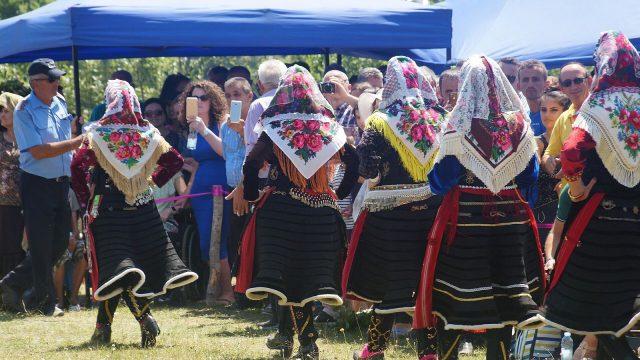
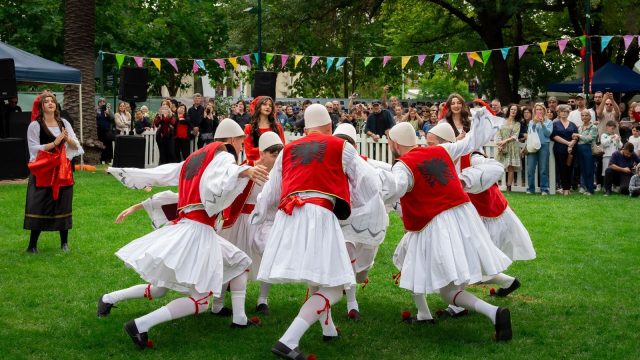
On the day, the city fills with visitors. There are concerts, folk dances, parades and stalls selling food and crafts. The streets are crowded from morning to night, and many people from Tirana make the short trip to join in.
Ballokume, the cookies of the day
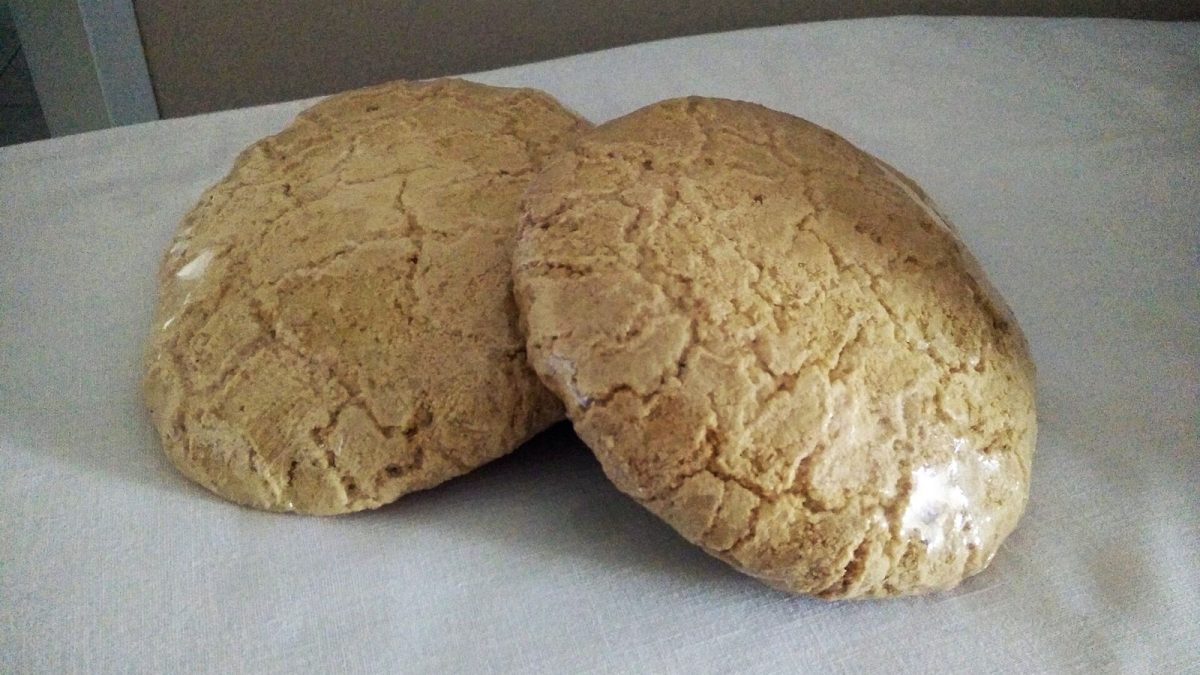
You cannot talk about Dita e Verës without ballokume. These round, pale-yellow cookies are made from cornmeal, butter, sugar and eggs. They have a cracked top and a texture that is crisp on the outside and soft and crumbly inside. Elbasan’s bakers are famous for them, and families across Albania bake them at home in the days before 14 March.
The basic method is simple: butter and sugar are beaten for a long time until very pale, then eggs and cornmeal are added. The dough is shaped into small rounds and baked until the tops crack. The long beating is what gives ballokume their lightness, and every grandmother has her own opinion on how long is long enough.
The verore bracelet
Another custom is the verore: a bracelet made of twisted red and white thread. Children and adults tie it around the wrist in early March for good luck and health. When the first swallows return or the trees blossom, the verore is taken off and tied to a branch of a flowering tree, or left under a stone. Similar customs exist elsewhere in the Balkans under different names, which shows how old and widely shared this tradition is.
A national holiday
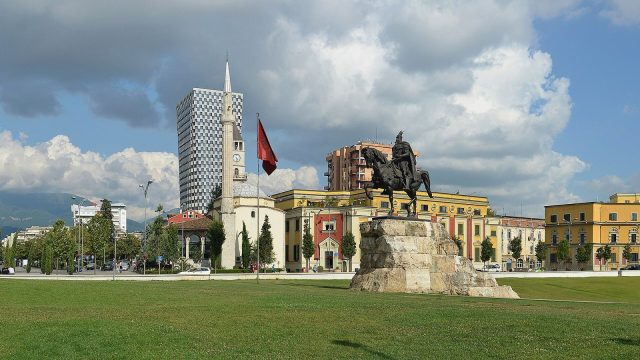
Dita e Verës became an official public holiday in Albania in 2004. Since then, celebrations have grown in Tirana and other cities as well, with concerts and outdoor events. For many families it is a day for a walk, a picnic if the weather allows, and a plate of ballokume with coffee.
If you are in Albania on 14 March
- Head to Elbasan for the biggest celebration, and arrive early to beat the traffic.
- Buy ballokume from a local bakery rather than a supermarket; the difference is clear.
- Look for a verore at street stalls and tie it on. Someone will happily explain the custom.
- Wish people “Gëzuar Ditën e Verës!” (Happy Summer Day!).
It may still be cool outside, but on 14 March Albanians choose to believe summer is on its way. After a long winter, it is a hard idea to argue with.