If you are invited to an Albanian wedding (in Albania, Kosovo, North Macedonia or anywhere in the diaspora) expect a big, loud and joyful event. Weddings are one of the main ways families mark their place in the community, and they bring together relatives from across the world. Customs vary by region and religion, but many elements are shared.
The engagement (fejesa)
Traditionally, marriages were arranged between families, sometimes with the help of a matchmaker (shkuesi). Today couples choose each other, but the families still play a big role. The engagement is often marked by a visit from the groom’s family to the bride’s home, the exchange of rings and gifts, and a meal. In some areas, the groom’s side brings sweets and gold jewellery for the bride.
The days before the wedding
Preparing the house
In the week before the wedding, relatives gather at both family homes to cook, decorate and prepare. Traditional songs are sung while the work is done, and the house is open to visitors who come to congratulate the family.
The henna night (nata e kanës)
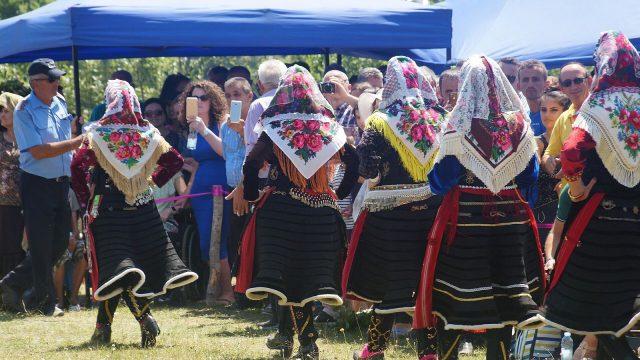
In many Kosovar, Macedonian-Albanian and some Albanian communities, the bride’s family holds a henna night shortly before the wedding. Women gather, sing special songs, and henna is applied to the bride’s hands, often with a coin placed in her palm as a wish for prosperity. The bride may wear a traditional costume, which differs greatly from region to region and can be richly embroidered.
The bride’s trousseau (paja)
The bride’s trousseau (linens, clothes, embroidered textiles and household items) was traditionally prepared over years and displayed or transported to the groom’s home. Modern versions are smaller, but in many families the custom continues.
The wedding day
Collecting the bride
The groom’s party, often in a long convoy of cars with horns blaring and flags waving, drives to the bride’s house to “take the bride” (marrja e nuses). There may be music, a playful negotiation at the door, and an emotional farewell as the bride leaves her parents’ home.
Arrival at the groom’s home
When the bride arrives at her new home, a number of symbolic gestures may take place depending on the region: the bride may be handed a baby boy to hold as a wish for children, she may touch the door frame with honey or butter for a sweet life, or bread may be broken over her head. These customs are gestures of luck and welcome rather than formal ceremonies.
The reception
The main celebration usually takes place in a large restaurant or wedding hall. There is a live band or singer, a long meal served in many courses, and above all, dancing.
The dance (valle)
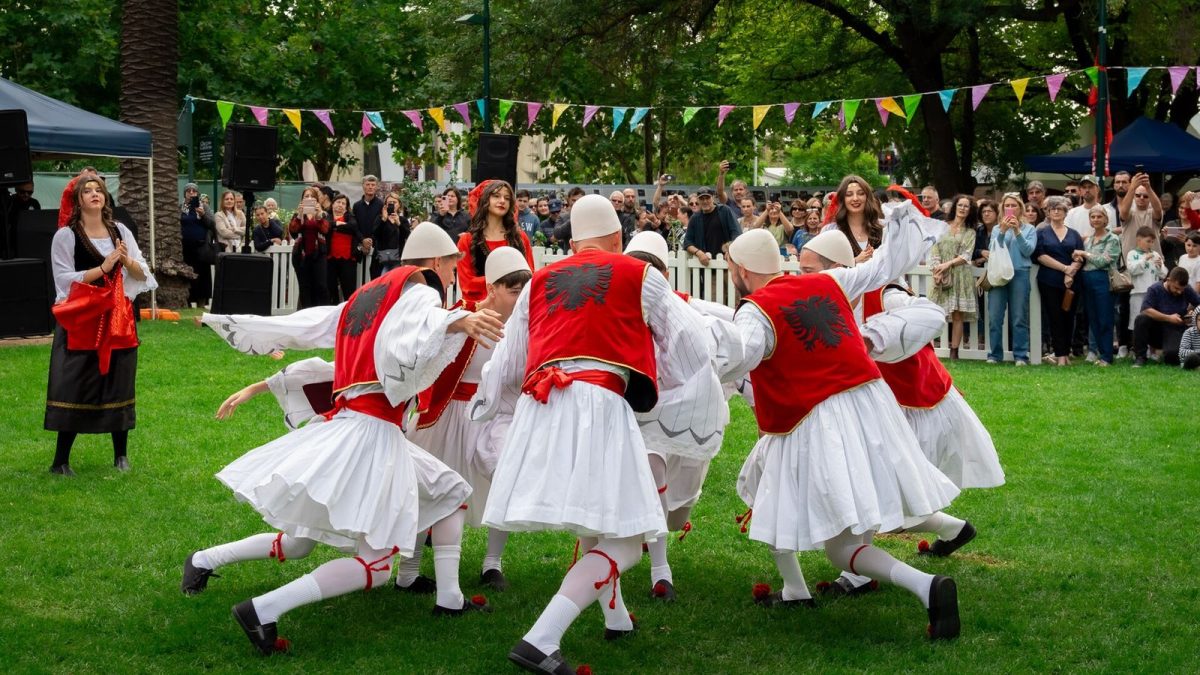
The valle is a line or circle dance led by one person waving a handkerchief. Others join hand in hand or by linking little fingers, moving with small steps. Different songs have different rhythms, and some regional dances are slow and dignified while others are fast and energetic. The bride and groom lead certain dances, and family members take turns at the front.
For guests: join the line when invited, nobody expects you to know the steps. Watch the person next to you, keep your steps small and follow the rhythm. Refusing to dance all night may disappoint your hosts more than dancing badly.
Money and gifts
Cash is the most common wedding gift. In many communities guests place money in an envelope; in others, banknotes are pinned on or thrown over the couple or the dancers, or tucked into the musicians’ instruments as a tip during a song dedicated to someone. It is a good idea to ask a local friend what is usual for that particular family and region.
Religion and diversity
Albanians may be Muslim, Catholic, Orthodox or non-religious, and many families include more than one faith. Religious ceremonies (a civil ceremony plus, where wanted, a church wedding or an imam’s blessing) are typically short compared with the social celebration around them. Mixed traditions are common and celebrated.
Etiquette for guests
- Dress smartly. Albanian weddings are formal; suits and elegant dresses are the norm.
- Expect a long night. Receptions often start in the evening and continue well past midnight.
- Congratulate the parents. Weddings are family events; greeting both sets of parents is important.
- Say the right words. “Me fat të mirë!” (with good luck) or “Për jetë të lumtur!” (for a happy life) are good wishes for the couple.
Weddings and the diaspora
Because so many Albanians live abroad, summer weddings often double as family reunions. Couples living in Germany, Switzerland, Italy, the UK or the US frequently travel home to marry, and towns can fill with wedding convoys on summer weekends. It is one of the clearest signs of how strongly family and homeland ties remain.
Sources and further reading: ethnographic collections of the National Ethnographic Museum (Tirana) and the Ethnological Museum Emin Gjiku (Pristina); regional folklore studies on Albanian wedding songs and customs.