In many Albanian homes, the smell of melted butter and walnuts is the smell of a holiday. Bakllava, as baklava is called in Albanian, is baked for Bajram at the end of Ramadan and for Kurban Bajram, but also for New Year’s Eve, which in Albania is one of the biggest family celebrations of the year. In many Catholic and Orthodox families, too, a tray of bakllava on 31 December is simply part of the tradition.
A dessert of many layers
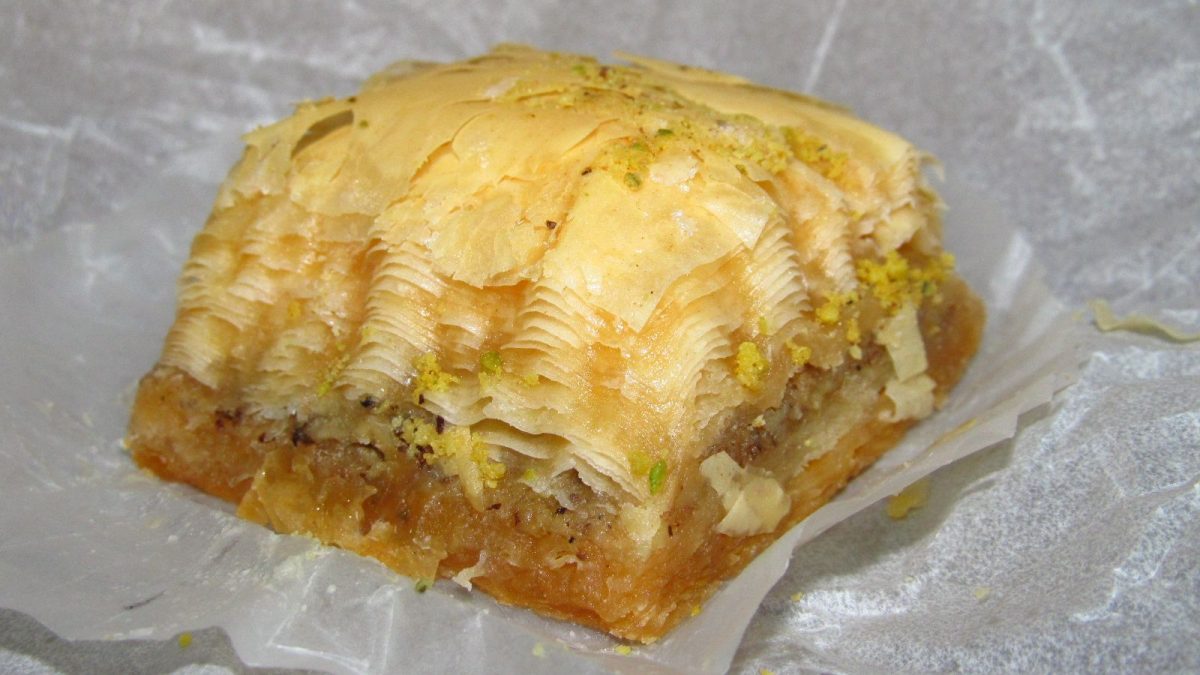
Bakllava is made from many sheets of very thin pastry, brushed with butter and layered with ground walnuts, then cut, baked and soaked in sugar syrup. The dessert is shared across the former Ottoman world, from Turkey and Greece to Bosnia and the Middle East, and every country and family has its own version.
In Albania and Kosovo, many older women still roll the pastry by hand with a long thin rolling pin, stretching each sheet until it is almost transparent. This takes skill and patience, and a good homemade bakllava might have dozens of layers. Most people today use ready-made pastry sheets, which give a very good result with much less work.
Ingredients (one medium tray)
- About 500 g thin pastry sheets (yufka or filo)
- 300 g walnuts, coarsely ground
- 250 g butter, melted (some families mix butter with a little oil)
- For the syrup: 600 g sugar, 500 ml water, a few slices of lemon
- Optional: a pinch of cinnamon or vanilla in the walnuts
Method
- Make the syrup first. Boil the sugar, water and lemon for about 10 minutes, then let it cool completely.
- Layer the base. Butter a tray. Lay down several pastry sheets one by one, brushing each with butter.
- Add walnuts. Sprinkle a thin layer of walnuts. Continue alternating a few buttered sheets with walnuts until the nuts are used up.
- Finish the top. Cover with several more buttered sheets. The top layers should be generously buttered so they become crisp and golden.
- Cut before baking. With a sharp knife, cut the bakllava into diamonds or squares, right through to the bottom. This is essential: once baked, it would shatter.
- Bake slowly. Bake at about 170°C for roughly an hour, until deep golden. Oven times vary, so watch the colour rather than the clock.
- Add the syrup. Pour the cold syrup slowly over the hot bakllava as soon as it comes out of the oven. You will hear it sizzle.
- Wait. Leave it uncovered for several hours, ideally overnight, so the syrup soaks in while the top stays crisp.
The rules home bakers follow
- Hot and cold: one should be hot and the other cold. Hot syrup on hot bakllava makes it soggy. Most Albanian cooks pour cold syrup on hot pastry.
- Do not rush the butter: every sheet needs some. Dry sheets bake into a papery layer that breaks apart.
- Walnuts, not too fine: coarsely ground walnuts give texture. Some families use a mix of walnuts and hazelnuts.
- Make it ahead: bakllava is better on the second day, which is why it is baked before the holiday, not on the day itself.
A dessert for guests
During Bajram, visits between relatives and neighbours continue for days, and each household offers guests a plate of bakllava with coffee or a glass of water. Refusing is difficult. On New Year’s Eve, it sits on the table next to the roast, the salads and the other sweets, and is still being eaten on 1 January.
If you are invited to an Albanian home during the holidays, expect to be offered a piece, and then another. Saying it is the best you have ever tasted is polite. With homemade bakllava, it is often true.