Gjakova (Đakovica in Serbian) lies in south-western Kosovo, close to the border with Albania. It rarely appears at the top of travel lists, and that is part of its charm. Visitors who come for an afternoon often stay for a night, drawn by the old bazaar, the slow evenings and a café culture that many Kosovars consider the best in the country.
Çarshia e Madhe, the Grand Bazaar
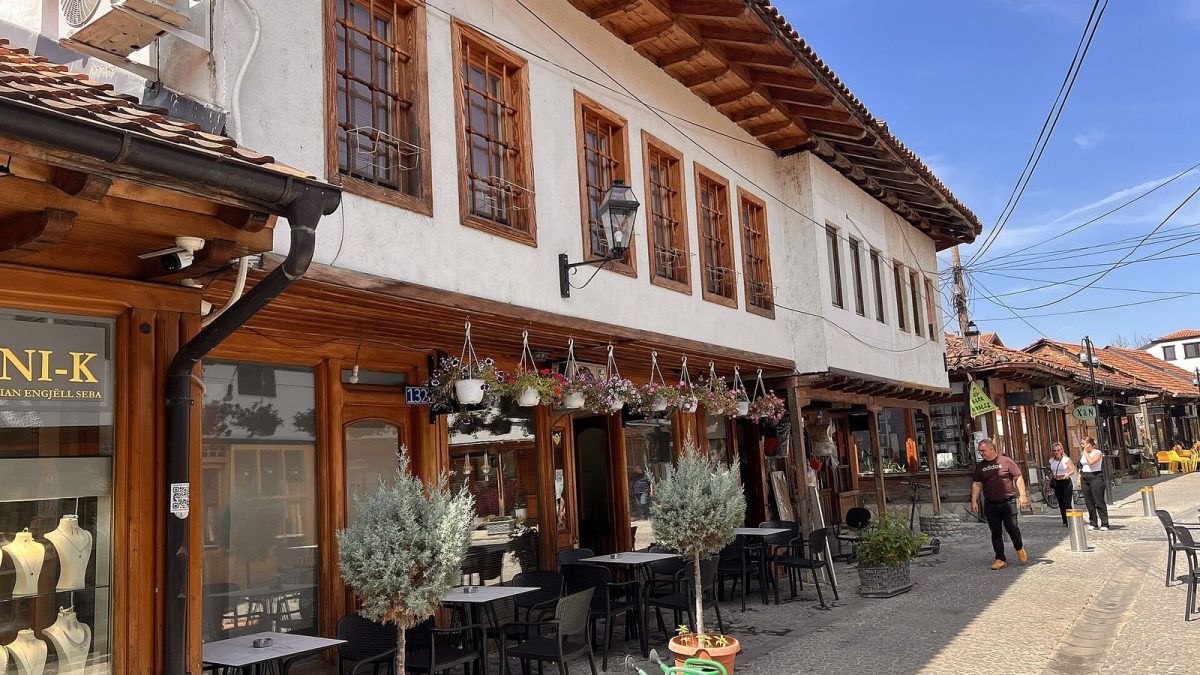
The Grand Bazaar is the heart of the old town: a long, gently curving street of low shops with wooden shutters, overhanging roofs and cobblestones. It developed during the Ottoman period as a trading centre for craftsmen such as tailors, silversmiths, saddle makers and coppersmiths. Each trade had its own section, and some family workshops continued for generations.
Much of the bazaar was burned during the 1999 war. It has since been carefully restored, and today the old shopfronts house cafés, small restaurants, tailors, jewellers and souvenir shops. Come in the early evening, when the light is soft and the tables fill with people.
The Hadum Mosque
At the edge of the bazaar stands the Hadum Mosque, built in the sixteenth century and one of the most important Ottoman monuments in Kosovo. Its painted interior and the small complex around it, which once included a library and other buildings, give a sense of how the town was organised around religious and trading life. As with any working mosque, dress modestly and avoid prayer times if you want to look inside.
The bridges
Gjakova is known for its stone bridges. Two are worth the effort:
- Ura e Tabakëve (Tanners’ Bridge): a small, steep Ottoman bridge on the edge of town, named after the tanners who once worked along the river.
- Ura e Terzive (Tailors’ Bridge): a few kilometres outside town, a long stone bridge with a series of arches over the Erenik river. According to tradition, it was paid for by the tailors’ guild of Gjakova. It is a lovely spot for a short walk, especially in late afternoon.
Coffee, and lots of it
People in Gjakova take their coffee seriously. The town is famous across Kosovo for its cafés, where a macchiato is made with care and conversation can last for hours. You will notice that cafés are full on weekday mornings as well as evenings. Sitting down for coffee is not wasted time here; it is how friendships, business and news are handled.
If you are invited to a home, expect Turkish-style coffee, sweets and a generous welcome. Gjakova families are known for hospitality, and refusing a second coffee politely takes some practice.
Food to try
Gjakova shares much of its cuisine with the rest of Kosovo: flija, pite, grilled meat and slow-cooked dishes. Look for local bakeries selling fresh pite in the morning, and restaurants in the bazaar serving traditional plates at lunch. In autumn, the market is full of peppers, and many households are busy making ajvar and pickles for winter.
Practical information
- From Pristina: about 1.5 hours by road. Buses run regularly.
- From Prizren and Peja: roughly an hour from each, which makes Gjakova easy to combine on a western Kosovo loop.
- From Albania: the Qafa e Morinës border crossing connects Gjakova with Kukës and the road to Tirana.
- How long: half a day covers the bazaar and the mosque. Stay a night if you want the evening atmosphere and a visit to the Tailors’ Bridge.
Gjakova is not a place of big monuments. It is a place to walk slowly, sit down, and watch a Kosovar town go about its day. For many travellers, that ends up being the part of the trip they remember.