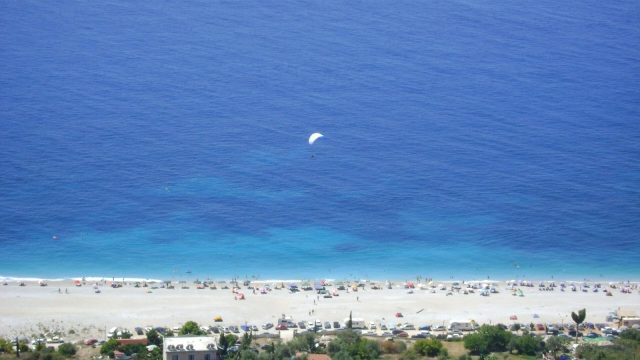
For many Albanians and Kosovars, Durrës means one thing: summer. The long sandy beach south of the port fills with families from July to the end of August, and the seafront promenade is busy until late at night. But Durrës is also one of the oldest continuously inhabited cities in Albania, and its history is visible in the middle of town if you know where to look.
A very old port
The city was founded in the seventh century BC by Greek colonists from Corinth and Corcyra (modern Corfu), who called it Epidamnos. Under the Romans it became Dyrrachium, one of the most important ports on the Adriatic. The Via Egnatia, the great Roman road that crossed the Balkans to Thessaloniki and on towards Constantinople, began here. Today Durrës is still the country’s largest port, with ferries to Italy and a constant flow of cargo.
That long history means layers. Roman, Byzantine, Venetian and Ottoman remains sit next to communist-era apartment blocks and new hotels. It can look chaotic, but walking the centre with a little background makes it much more interesting.
The Roman amphitheatre
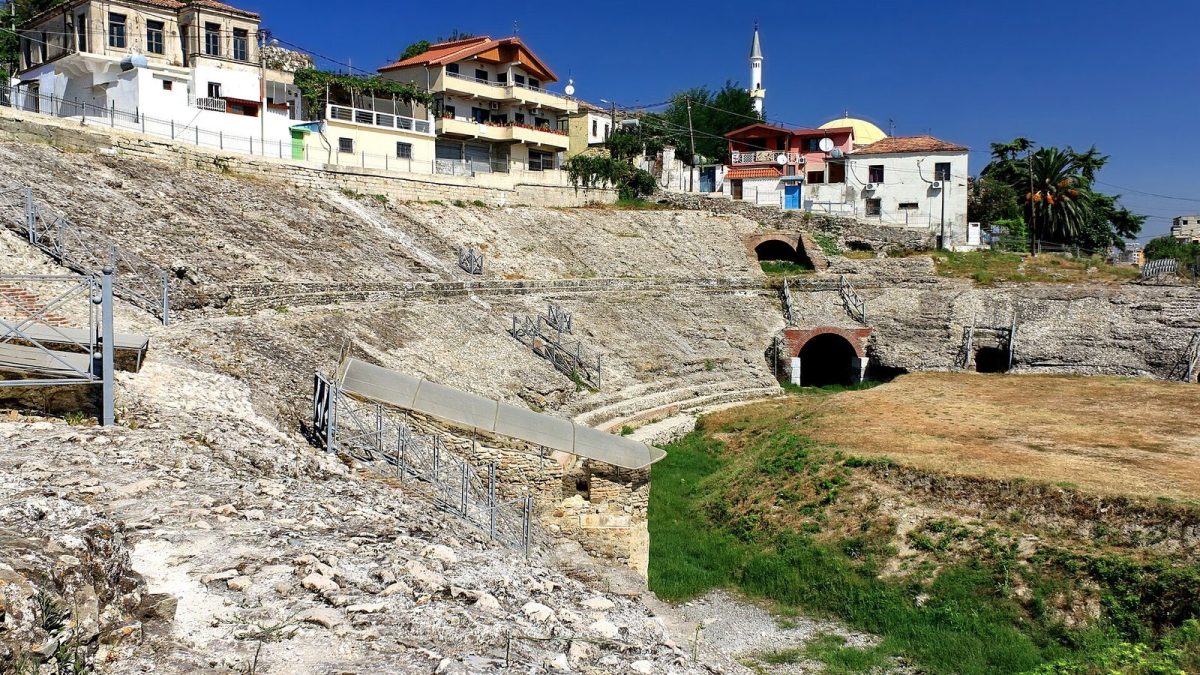
The amphitheatre is the main sight, and one of the largest Roman amphitheatres in the Balkans. It dates from the second century AD and could hold many thousands of spectators. For centuries it was buried under houses, and it was only rediscovered in the 1960s. Part of it is still covered by later buildings, which is one reason it feels so unusual: you walk down from a residential street into the arena.
Inside, look for the small early Christian chapel built into one of the passages, with wall mosaics that are rare survivors in Albania. Bring patience if you visit in high summer, as there is little shade.
The walls and the Venetian tower
Sections of the Byzantine city walls run near the amphitheatre and down towards the sea. The round Venetian tower at the end of the main boulevard is the most photographed part. It now houses a café and bar, and sitting at the top with a drink is a pleasant way to start an evening. Further along you will find the remains of a Roman forum and Roman baths, partly visible behind railings in the middle of town.
The archaeological museum
The Archaeological Museum on the seafront is one of the best in the country, with finds from ancient Epidamnos and Dyrrachium: sculpture, funerary stones, everyday objects and a strong collection related to the cult of Venus. If the amphitheatre gave you a sense of scale, the museum gives you the details of daily life.
The 2019 earthquake
On 26 November 2019, a strong earthquake hit the Durrës area and caused deaths and heavy damage in the city and nearby towns. Much has been rebuilt since, but you may still notice new buildings and reconstruction work. It is a sensitive subject for local people, and a quiet reminder that the region sits in an active seismic zone.
Practical information
- From Tirana: about 40 minutes by road, depending on traffic. Buses run frequently from the regional terminal.
- From the airport: Tirana International Airport is roughly half an hour away, which makes Durrës an easy first or last night.
- Beaches: the main beach starts south of the port and runs for kilometres. The quieter stretches are further south, towards Golem.
- Ferries: regular services link Durrës with Bari and Ancona in Italy.
A good plan is a morning in the old centre, lunch in one of the seafood restaurants near the port, and an afternoon on the beach. In spring or autumn, when the crowds have gone, the city is at its most pleasant: warm enough to sit outside, quiet enough to enjoy the ruins without the summer heat.