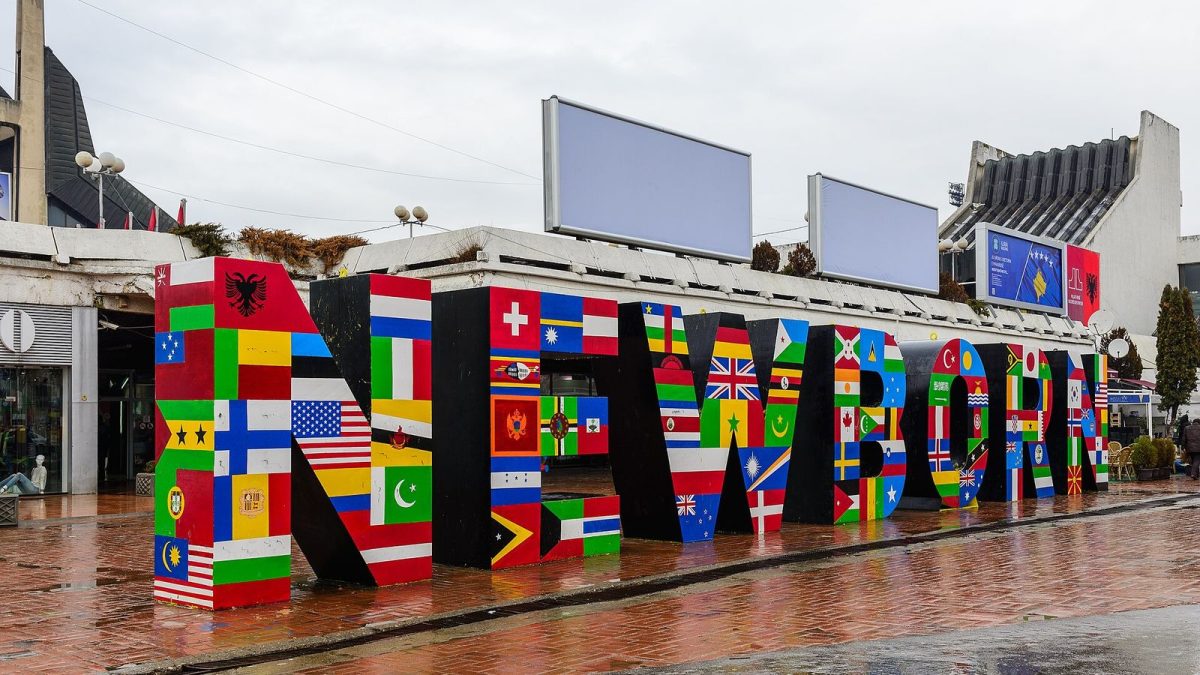
Few monuments are as photographed in Kosovo as a row of large capital letters standing outside the Palace of Youth and Sports in Pristina. They spell a single English word, NEWBORN, and they have become one of the most recognisable images of the country since 2008.
Unlike most monuments, NEWBORN does not stay the same. Its surface is repainted, usually around the anniversary of independence each February, so that every year it carries a different message. This guide explains how it came about and why it has lasted.
How the monument was created
On 17 February 2008, the Assembly of Kosovo declared independence. The same day, the NEWBORN typographic sculpture was unveiled in central Pristina. It was designed by Fisnik Ismaili and produced with the Pristina office of the advertising agency Ogilvy. The letters were initially painted yellow, and on the first day thousands of people signed them with markers, politicians, families, students and visitors all adding their names.
The choice of an English word was deliberate. It spoke to an international audience at a moment when Kosovo was seeking recognition from other states, and it described the mood of a country that saw itself as just beginning.
The work quickly attracted attention well beyond Kosovo, and it received international recognition in the advertising and design world.
A monument that is repainted
The signatures from 2008 eventually faded and the letters were repainted. That turned into a tradition: around each anniversary of independence, the monument receives a new design. Over the years, the paintwork has carried themes connected to what was happening in Kosovo and the wider world.
Some redesigns have been celebratory, using the colours of the flags of countries that recognised Kosovo. Others have been critical or reflective, for example, highlighting the long wait for visa-free travel to the Schengen area, a topic that dominated public debate for years until visa liberalisation for Kosovo citizens took effect at the beginning of 2024. On some anniversaries, letters have been rearranged or laid down to change the word itself, a way of making a political point with the same physical object.
Visiting tip: the monument is on the edge of the city centre, a short walk from Mother Teresa Boulevard. Early morning is the best time for photos without crowds; around 17 February you are likely to see the newly unveiled design and celebrations nearby.
Why NEWBORN works as a symbol
It invites participation
From the first day, people were encouraged to touch it and write on it. That made it feel less like an official monument and more like a shared object that belonged to the public.
It can change with the country
A statue in bronze says the same thing for a century. NEWBORN, by contrast, can respond to events. Each new design becomes a small public conversation about where the country is and what it hopes for.
It is simple
The word is easy to understand in any language, and the letters are large enough to frame a photograph. Visitors, schoolchildren and international delegations alike pose in front of it.
What else to see nearby
- Mother Teresa Boulevard: Pristina’s pedestrian main street, lined with cafés and the place where the city goes for its evening walk.
- The National Library of Kosovo: a building famous for its unusual design of domes and a metal lattice exterior; it has divided opinion for decades.
- The Heroinat memorial: a monument made from thousands of small medals, dedicated to the contribution and sacrifice of women during the war of the late 1990s.
- The Kosovo Museum and the old bazaar area: for a sense of the city before its rapid modern growth.
A small object with a big story
NEWBORN is not grand or expensive. It is a row of painted letters. But it has become one of the clearest examples of how a young country tells its story through public space, and because it changes every year, there is always a reason to go back and see what it says now.
Sources and further reading: Municipality of Pristina visitor information; reporting on the monument’s annual redesigns by Kosovo and international media; European Commission announcements on visa liberalisation for Kosovo (2023–2024).