Butrint is one of the most atmospheric archaeological sites in the Mediterranean. Instead of an open, sun-baked field of ruins, it is a city wrapped in woodland on a peninsula between Lake Butrint and the Vivari Channel, which links the lake to the sea. Turtles sun themselves on stones, frogs call from the flooded parts of the site, and centuries of history are layered within a short walk.
- Where: southern Albania, about 20 km south of Saranda.
- UNESCO: World Heritage site since 1992.
- Time needed: 2–3 hours for the main archaeological site.
- Getting there: regular buses and taxis from Saranda; boat trips from Corfu reach Saranda.
A city with many lives
The site was inhabited from prehistoric times. It became a Greek settlement, later a Roman city, then a Byzantine bishopric, and in the medieval period it was fought over by Byzantines, Angevins and Venetians. As the surrounding marshes spread and malaria took hold, the city was gradually abandoned. Archaeological excavations began in the 1920s and have continued, with international teams, ever since.
UNESCO inscribed Butrint as a World Heritage site in 1992, and the surrounding area was later declared a national park, protecting both the archaeology and the wetlands, which are also listed as a Ramsar site of international importance for birds.
What to see
A circular path takes you through the main monuments. In order, you will typically pass:
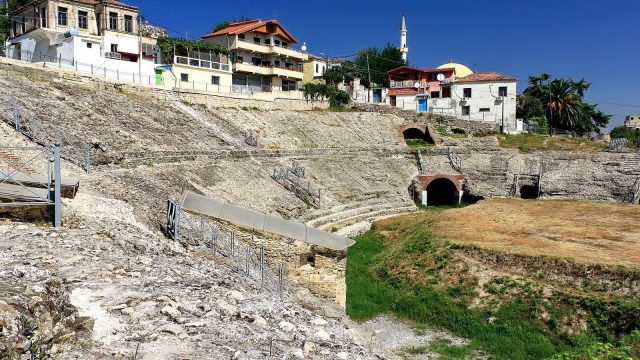
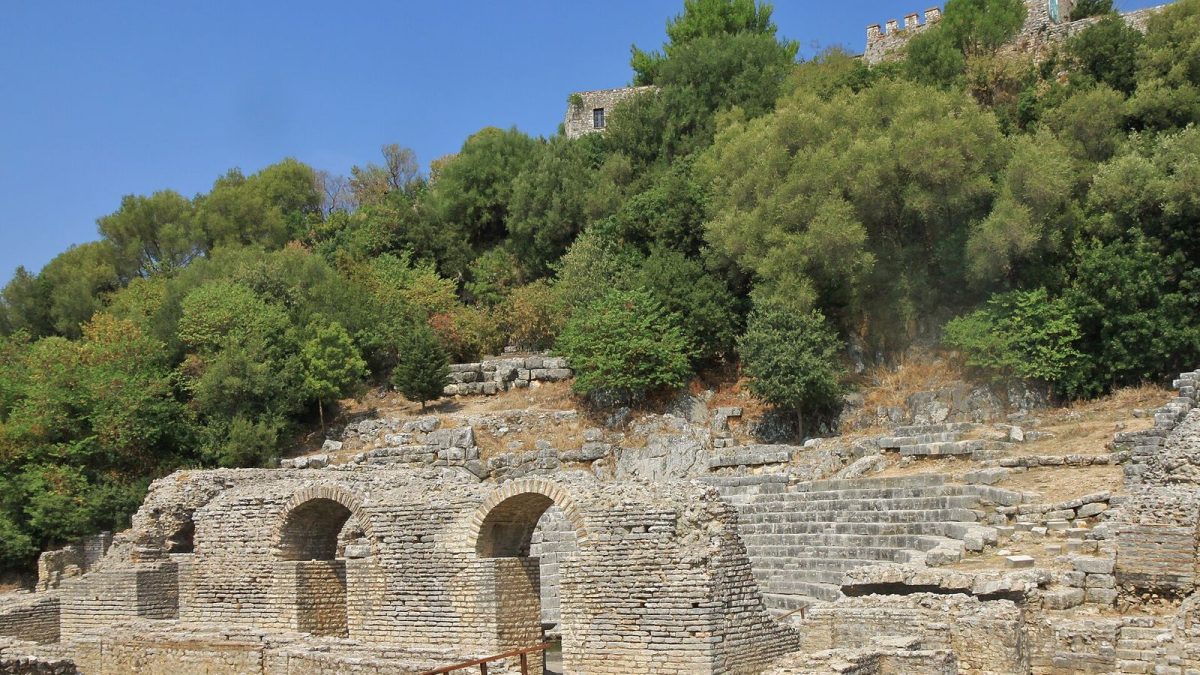
- The Theatre. A Greek-era theatre, later remodelled by the Romans, set against the hillside. Its lower rows are often partly flooded, which adds to the atmosphere.
- The Sanctuary of Asclepius. Butrint was known in antiquity as a healing centre dedicated to the god of medicine.
- The Roman baths and forum area. Remains of public buildings from the city’s Roman period.
- The Baptistery. A sixth-century Byzantine baptistery with a large mosaic floor of animals and plants. The mosaic is usually kept covered with sand for protection and only uncovered occasionally.
- The Great Basilica. An impressive Byzantine church whose arches still stand to almost full height.
- The Lion Gate. A city gate with a carved relief of a lion attacking a bull above the lintel.
- The Acropolis and museum. At the top of the hill, a small museum in a reconstructed castle displays finds from the site, and the walls offer views over the lake and channel.
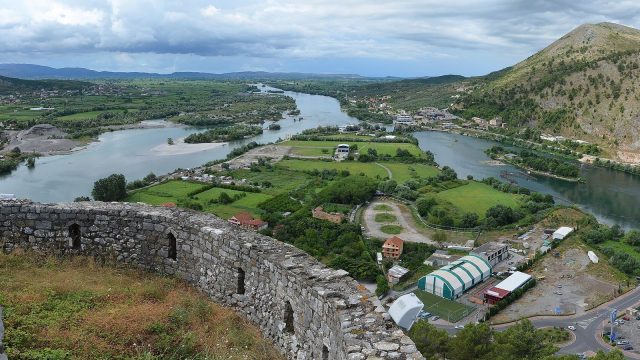
Don’t miss the view: from the acropolis you can see the Venetian triangular fortress across the Vivari Channel, the lagoon and, on clear days, the mountains of Greece. A small cable ferry near the entrance carries cars and people across the channel to the fortress side.
Planning your visit
Best time to go
Spring (April–June) and autumn (September–October) are ideal: green, mild and much quieter. In July and August, arrive at opening time to avoid both heat and coach groups. Mosquito repellent is useful in warm months.
Tickets and practicalities
- There is an entrance fee to the archaeological park; check current prices and opening hours on arrival or on the park’s official channels.
- Wear comfortable shoes, the paths are uneven and some stones are slippery.
- Carry water; there is a café near the entrance but not inside the site.
- Signs are in Albanian and English, and local guides are available at the gate.
Getting there
Buses run from Saranda town centre to Butrint regularly in summer, taking around 30–40 minutes along the coast road through Ksamil. Taxis are easy to find. If you are driving, there is parking at the entrance.
Combine it with
- Ksamil: a village just north of Butrint with small islands and turquoise water, popular for swimming. It is very busy in high summer.
- Saranda: the main resort town, with a long seafront promenade and ferries to Corfu.
- The Blue Eye (Syri i Kaltër): a deep, intensely blue spring inland, about 45 minutes from Saranda.
- Lëkurësi Castle: a hilltop fortress above Saranda with sunset views.
- Gjirokastër: the UNESCO stone city, about an hour and a half inland.
Why Butrint is special
Many ancient sites show one period of history. Butrint shows almost all of them, side by side, in a natural setting that feels untouched. You can walk from a Greek theatre to a Byzantine basilica in five minutes, then look out over a lagoon where fishermen still work. It is the best introduction to how many civilisations have passed through this corner of the Balkans.
Sources and further reading: UNESCO World Heritage Centre, “Butrint”; Butrint National Park; Ramsar Sites Information Service; publications of the Butrint Foundation.