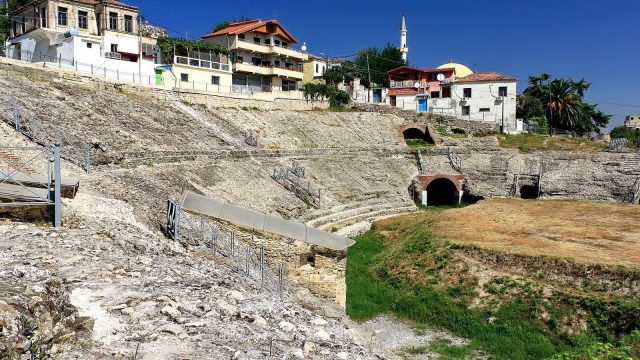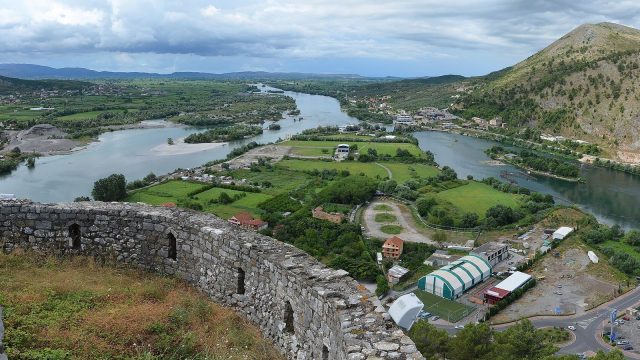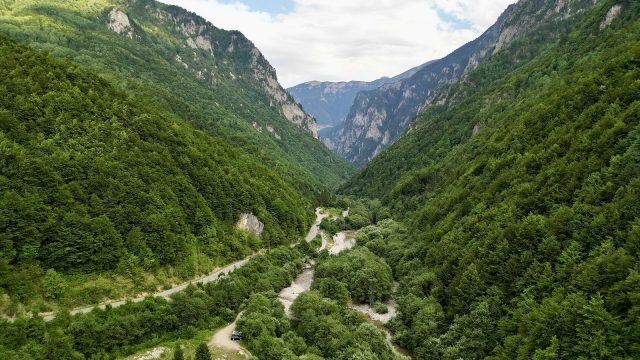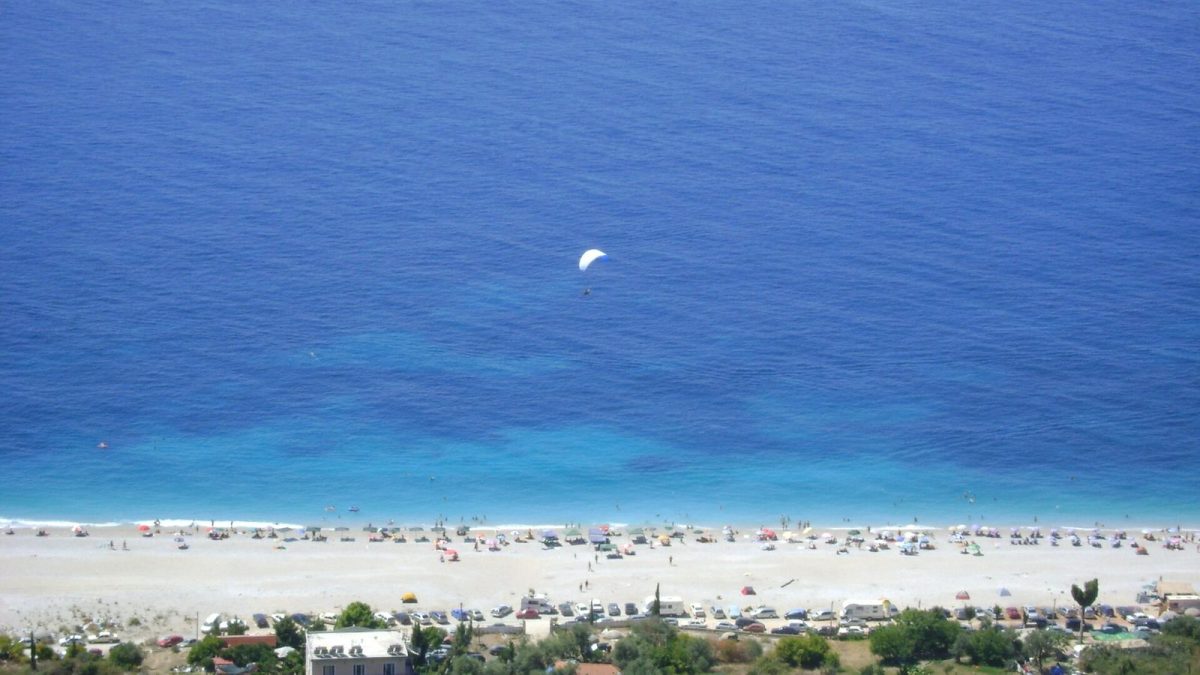
The Albanian Riviera has become one of the Mediterranean’s most talked-about coastlines. Mountains rise straight from the sea, villages cling to hillsides, and the water ranges from deep blue to bright turquoise. It is still less developed than much of the coast across the water in Greece and Italy, though construction is changing it quickly.
- Where: the Ionian coast of southern Albania, from the Llogara Pass to Ksamil near the Greek border.
- Getting around: the SH8 coastal road links the villages; a car gives the most flexibility.
- Best months: June and September; July–August is hot and busy.
- Beaches: mostly white pebbles with very clear water.
The drive over the Llogara Pass
Arriving from the north, the road from Vlorë climbs through the pine forests of Llogara National Park to a pass of over 1,000 metres, then descends in tight switchbacks with sweeping views over the Ionian Sea. Stop at the viewpoints near the top; on a clear day you can see the Riviera stretching south and the island of Corfu in the distance.
The main villages
Dhërmi and Drymades
The first major beach area after the pass. Long pebble beaches, beach clubs in summer, and an old village with stone houses and churches above the coast. Popular with younger travellers and summer music events.
Jale and Gjipe
Gjipe is a small beach at the mouth of a canyon, reached by a walk of about 20–30 minutes from the parking area or by boat. Jale is a small bay with a relaxed atmosphere.
Himara
A small town with a long beach, a seafront promenade and an old castle quarter on the hill above. It has a good mix of restaurants and guesthouses and a more lived-in feel than resort-only areas. Nearby coves like Livadhi, Llamani and Potami are worth exploring.
Porto Palermo
A sheltered bay with a well-preserved triangular fortress on a small peninsula, associated with the Ottoman-era ruler Ali Pasha of Tepelena. It is a good stop for a swim and a short visit.
Borsh and Lukovë
Borsh has one of the longest beaches on the Riviera, backed by olive groves and a ruined hilltop castle. It is quieter and good for families.
Ksamil
Near the southern end, Ksamil is famous for small islands just offshore and shallow turquoise water. It is extremely popular, and crowded, in July and August. It is a convenient base for visiting Butrint and the Blue Eye spring.
Beat the crowds: in high season, go to the beach before 10 am or after 5 pm, choose coves reachable only on foot or by boat, or visit in June and September when the water is still warm but villages are calmer.
Beach practicalities
- Sunbeds and umbrellas: many beaches have rented sets in summer; prices vary with location and season. Free areas exist on most beaches, but may be small in peak periods.
- Water shoes: useful on pebble beaches and rocky coves.
- Cash: carry some; not every beach bar or small restaurant takes cards.
- Boat trips: from Himara and Ksamil, boats visit sea caves and coves that are hard to reach by road.
What to eat
- Fresh grilled fish, octopus and mussels (mussel farming is common in the Butrint lagoon).
- Greek-style salads with local olives and feta-style cheese.
- Byrek and petulla (fried dough) for breakfast.
- Local olive oil and honey from the hill villages.
A suggested one-week route
- Day 1–2: Vlorë, then over the Llogara Pass to Dhërmi.
- Day 3–4: Himara as a base for coves and boat trips; visit Porto Palermo.
- Day 5: Borsh beach and the castle; continue south.
- Day 6–7: Ksamil, Butrint and the Blue Eye; optional day trip to Gjirokastër.
Getting there
The nearest major airport is Tirana, around four hours’ drive from the Riviera. Ferries connect Saranda with Corfu, and the Vlorë area has growing transport links. Buses run along the coast in summer, but schedules can be irregular; a rental car is the most practical way to explore.
The Albanian Riviera rewards a slow pace: a long lunch by the sea, a swim in an empty cove, and an evening walk in a village above the coast as the sun goes down over the Ionian.
Sources and further reading: Albanian National Tourism Agency; National Agency of Protected Areas, Llogara National Park; Butrint National Park.