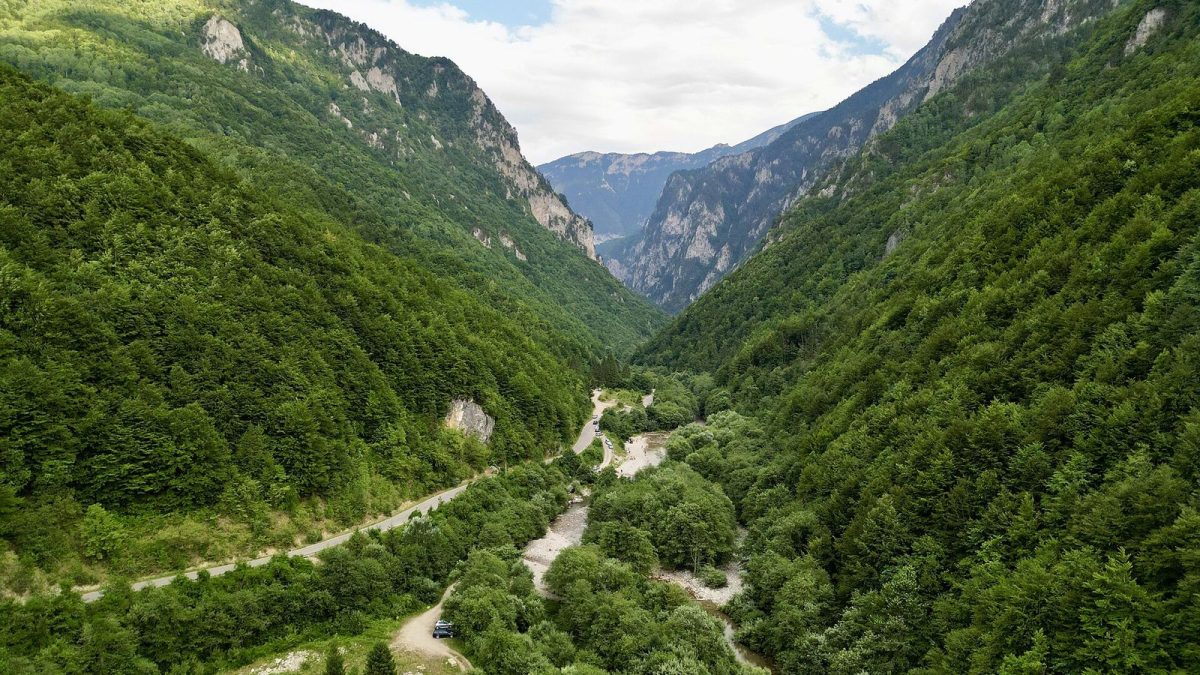
Peja is Kosovo’s gateway to the mountains. Within ten minutes of the city’s old bazaar, the road enters the Rugova Gorge, a narrow canyon carved by the Lumbardhi river between cliffs hundreds of metres high. Further up, the valley opens into alpine pastures and villages that feel far removed from the city below.
- Where: western Kosovo, starting at the edge of the city of Peja (Peć).
- Protected area: part of the Bjeshkët e Nemuna (Accursed Mountains) National Park.
- From Pristina: about 1.5 hours by road to Peja.
- Activities: hiking, via ferrata, zipline, caving, skiing and mountain villages.
Peja itself
Before heading into the mountains, spend a few hours in town:
- The old bazaar (Çarshia): cafés, craft shops and the Bajrakli Mosque.
- The Patriarchate of Peć: a complex of Serbian Orthodox churches from the thirteenth and fourteenth centuries with exceptional frescoes. It is part of the UNESCO World Heritage property “Medieval Monuments in Kosovo”. Visitors usually need to show ID at the entrance, and modest dress is expected.
- Peja Brewery: home of one of Kosovo’s best-known beers.
- Haxhi Zeka mill and the old stone houses: reminders of the town’s trading past.
The Rugova Gorge
The gorge road follows the river through tunnels and under overhanging cliffs. There are several places to stop:
- Via ferrata routes. Fixed cables and ladders on the canyon walls allow non-climbers to scale cliffs safely with a harness. Several routes of different difficulty exist; book with a local operator who provides equipment and guidance.
- Zipline. A long zipline crosses the canyon, a popular summer activity.
- Radavc Cave and the White Drin spring: just outside Peja in the other direction, a cave with stalactites and the dramatic source of the White Drin river with a waterfall.
Safety note: the gorge road is narrow and winding with falling-rock zones. Drive slowly, don’t stop in tunnels, and park only in designated spots.
Up into the mountains
Beyond the gorge, the road climbs to villages such as Kuqishtë, Drelaj and Boga.
Hiking
Marked trails lead to glacial lakes and peaks. Popular options include the hike to Liqeni i Kuqishtës and the lakes beneath Hajla, and longer routes to Hajla peak (about 2,400 metres) with views into Montenegro. Rugova is also a section of the Peaks of the Balkans trail.
Boga in winter
Boga has a small ski area that attracts families from across Kosovo in winter. Facilities are modest compared with major resorts, but the setting is beautiful and prices are low.
Village life
Rugova’s highlanders have their own traditions, including a well-known regional dance, the Rugova dance, performed with energetic stamping and swords in some versions. Summer festivals in the villages celebrate this heritage.
Where to stay
Options range from hotels in Peja to mountain guesthouses and wooden chalets in the Rugova villages. Staying up the valley gives you quick access to trails and starry skies; staying in Peja gives you restaurants and nightlife.
Food to try
- Rugova cheese and fresh dairy products from mountain farms.
- Flija, the layered pancake, often made outdoors at guesthouses.
- Grilled lamb and local trout.
- Mountain tea and blueberries in summer.
Suggested two-day plan
- Day 1: Peja old bazaar and Patriarchate in the morning; drive into the gorge in the afternoon for the via ferrata or zipline; overnight in a mountain guesthouse.
- Day 2: full-day hike to the lakes or toward Hajla; return to Peja for dinner.
Rugova shows a side of Kosovo many visitors don’t expect: dramatic canyons, high pastures and genuine mountain hospitality, less than two hours from the capital.
Sources and further reading: Municipality of Peja tourism information; Bjeshkët e Nemuna National Park; UNESCO World Heritage Centre, “Medieval Monuments in Kosovo”; Peaks of the Balkans route information.