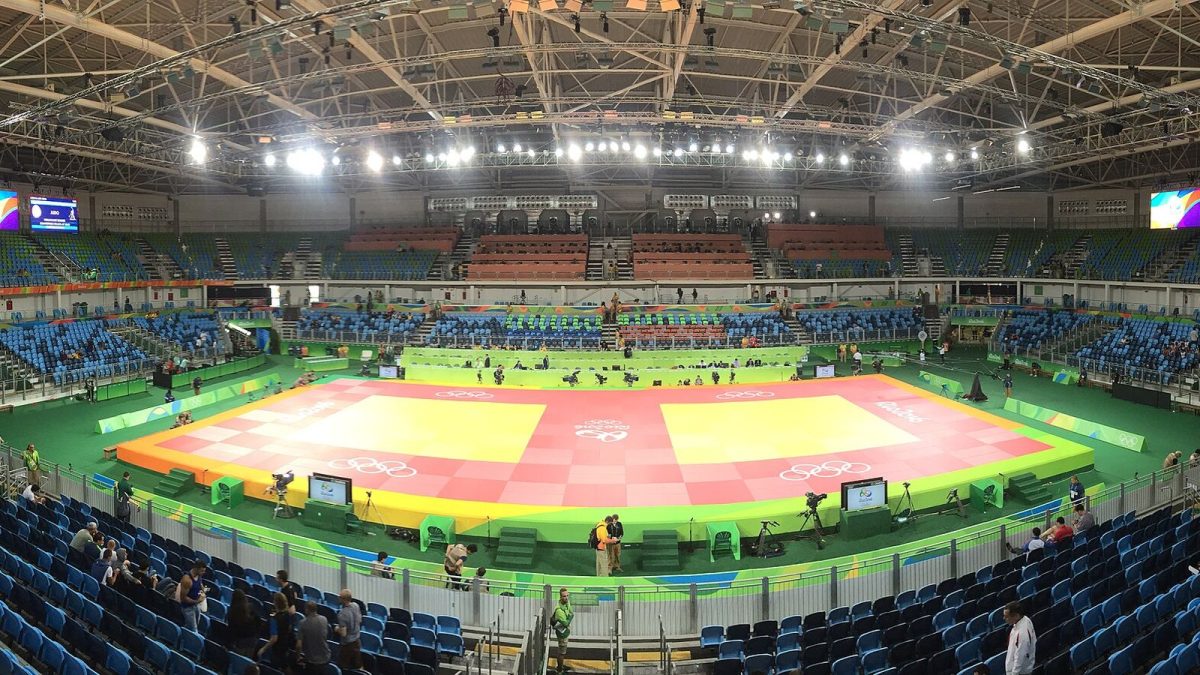
On 7 August 2016, in Rio de Janeiro, a 25-year-old judoka from Peja stood on top of the Olympic podium while Kosovo’s anthem played for the first time at the Games. Majlinda Kelmendi had won gold in the women’s −52 kg category, giving Kosovo its first Olympic medal at its very first Games as a participating nation.
Kosovo’s path to the Olympics
The International Olympic Committee granted full recognition to the Olympic Committee of Kosovo in December 2014. Before that, athletes from Kosovo who wanted to compete at the Olympics had to do so for another country. Kelmendi herself had competed at London 2012 representing Albania, after declining offers to compete for other nations.
Rio 2016 was therefore a double milestone: Kosovo’s first appearance at the Olympic Games under its own flag, and a chance for its best-known athlete to compete for the country she had always represented in international judo.
Who is Majlinda Kelmendi?
Kelmendi was born in 1991 in Peja, in western Kosovo. She began judo as a child at the Ippon club run by coach Driton Kuka, training in difficult conditions in the years after the war. She rose quickly through junior ranks and became a world-class senior competitor.
Before Rio, she had already won the World Championships twice (2013 and 2014) and multiple European titles, competing under the International Judo Federation’s flag at a time when Kosovo was not yet recognised by the IOC. She arrived in Rio as one of the favourites.
The day in Rio
Kelmendi fought through the rounds of the −52 kg tournament and reached the final, where she faced Italy’s Odette Giuffrida. She won the contest to take the gold medal. The images of her celebrating with her coach, and of her on the podium with the flag of Kosovo, were broadcast around the world and celebrated in Pristina, Peja and across the diaspora.
Why it resonated: for many people in Kosovo, the medal was about more than sport. It was the first time the country’s anthem was heard at the Olympics, and it came from an athlete who had trained at home through hard years instead of moving abroad.
The Peja judo school
Kelmendi’s gold was not a one-off. The same club and coaching team in Peja produced a generation of world-class judoka. At the Tokyo Olympic Games (held in 2021), Kosovo won two more judo gold medals: Distria Krasniqi in the women’s −48 kg and Nora Gjakova in the women’s −57 kg. For a small country with limited sports infrastructure, the record is remarkable.
Coaches and athletes often credit a few key ingredients: early specialisation, a tight-knit club culture, demanding training, and role models who show younger athletes that winning at the highest level is possible from Peja.
After Rio
Kelmendi continued to compete at the top level after 2016, winning further European titles and competing at Tokyo, before announcing her retirement from competition. She remains one of the most celebrated public figures in Kosovo and is regularly invited to support youth sport and women’s participation in sport.
Timeline
| Year | Milestone |
|---|---|
| 2012 | Competes at London Olympics for Albania. |
| 2013 & 2014 | World champion in the −52 kg category. |
| Dec 2014 | IOC grants full recognition to the Olympic Committee of Kosovo. |
| 7 Aug 2016 | Wins Olympic gold in Rio, Kosovo’s first Olympic medal. |
| 2021 | Kosovo wins two more judo golds in Tokyo (Krasniqi, Gjakova). |
Kelmendi’s victory remains one of the defining sporting moments in Kosovo’s history, a story about talent, loyalty to home and a small club that proved it could compete with the world.
Sources and further reading: Olympics.com results database (Rio 2016 and Tokyo 2020 judo); International Judo Federation athlete profiles (ijf.org); Olympic Committee of Kosovo.