For years, Kosovo’s football federation existed in a kind of limbo. Clubs played in a domestic league, and a national team assembled for occasional friendlies, but there were no official competitive matches and no route into European club competitions. That changed within ten days in May 2016, when first UEFA and then FIFA accepted the Football Federation of Kosovo (FFK) as a full member.
Why it took so long
The FFK was founded decades earlier, but international football membership requires recognition by the sport’s governing bodies, and Kosovo’s status is disputed by some states. UEFA’s statutes had traditionally referred to countries recognised by the United Nations as independent states, which created a hurdle.
Progress came in stages. In 2014, FIFA allowed Kosovo to play friendly matches against member associations, with some restrictions on symbols. Kosovo played its first FIFA-sanctioned friendly against Haiti in March 2014. That opened the door to full applications.
The votes
At the UEFA Congress in Budapest on 3 May 2016, member associations voted in favour of admitting Kosovo, making it UEFA’s 55th member. Ten days later, the FIFA Congress in Mexico City approved its membership as well. Both decisions meant that Kosovo’s national teams and clubs could take part in official competitions.
What changed immediately
- The national team entered qualifying for the 2018 World Cup. Its first official match was away to Finland in September 2016, ending 1–1, with Valon Berisha scoring Kosovo’s first competitive goal.
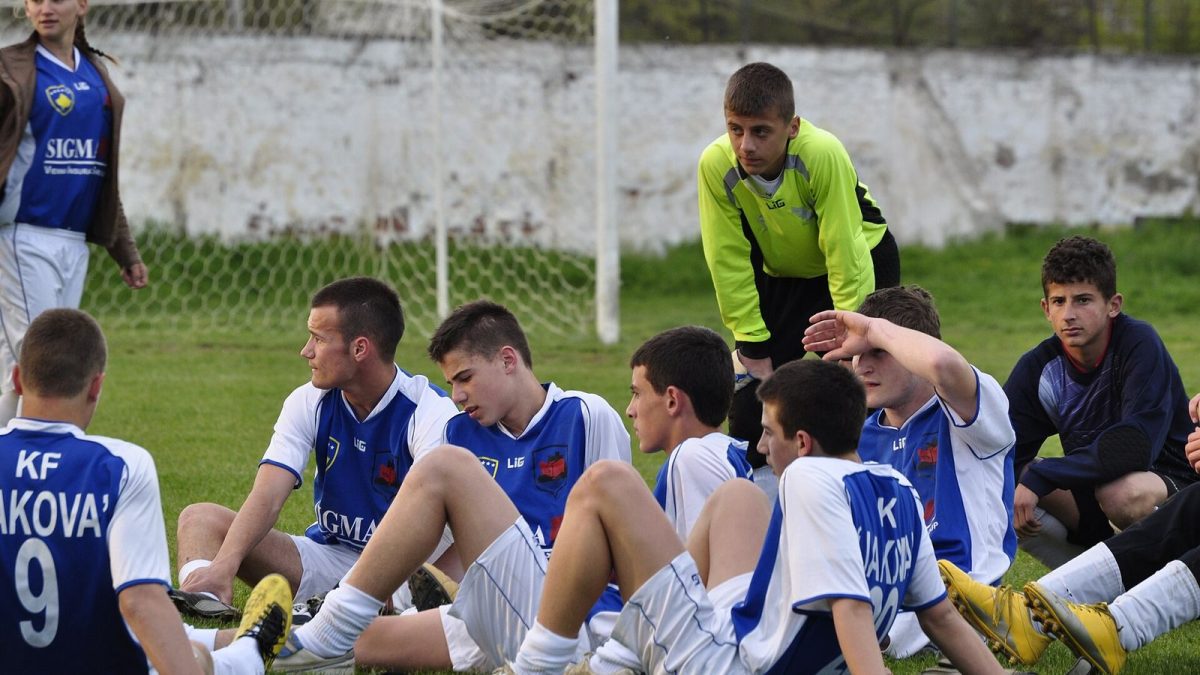
- Clubs such as Feronikeli, Prishtina, Drita and Ballkani began entering the qualifying rounds of the UEFA Champions League, Europa League and Conference League.
- Players with dual heritage: many born or raised in Switzerland, Germany, Scandinavia and elsewhere, gained the option to represent Kosovo in official matches, subject to FIFA’s eligibility rules.
Eligibility explained: FIFA rules generally allow a player to switch national associations only under specific conditions, for example if they have not played a competitive senior match for another country, or meet the criteria of later rule changes. In 2016 FIFA processed a number of applications from players who wished to switch to Kosovo.
The early years
The first World Cup qualifying campaign was difficult, as expected for a brand-new team. But the side improved quickly. In the UEFA Nations League 2018–19, Kosovo won its group in League D without losing a match, earning promotion and a place in the playoff path for Euro 2020. Kosovo reached the playoff semi-finals before losing away to North Macedonia.
The team also enjoyed a long unbeaten run in competitive and friendly matches during 2017–2019, which gave fans genuine hope of reaching a major tournament.
Club football
Kosovo’s clubs started from a low base, with limited budgets and stadiums that needed upgrading to meet UEFA standards. Over time, results have improved, and Ballkani’s progress to the group stage of the UEFA Europa Conference League in 2022–23 was celebrated as a milestone for the domestic game.
Stadiums and infrastructure
The Fadil Vokrri Stadium in Pristina, named after one of Kosovo’s most celebrated footballers and later FFK president, was renovated to host international matches. Investment in pitches and academies has followed, though infrastructure remains one of the main challenges.
Timeline
| Date | Milestone |
|---|---|
| March 2014 | First FIFA-sanctioned friendly, against Haiti. |
| 3 May 2016 | Admitted to UEFA. |
| 13 May 2016 | Admitted to FIFA. |
| Sept 2016 | First official match: Finland 1–1 Kosovo. |
| 2018–19 | Wins Nations League group, reaches Euro 2020 playoff path. |
Membership of UEFA and FIFA did not instantly make Kosovo a football power, but it gave its players, clubs and fans something they had waited a long time for: the chance to compete for real.
Sources and further reading: UEFA.com and FIFA.com announcements of the 2016 Congress decisions; Football Federation of Kosovo (ffk-kosova.com); UEFA match archives.