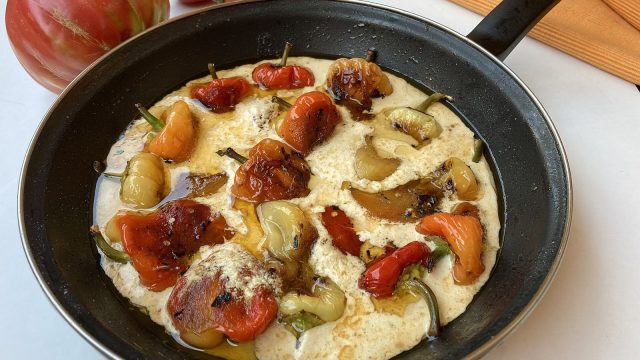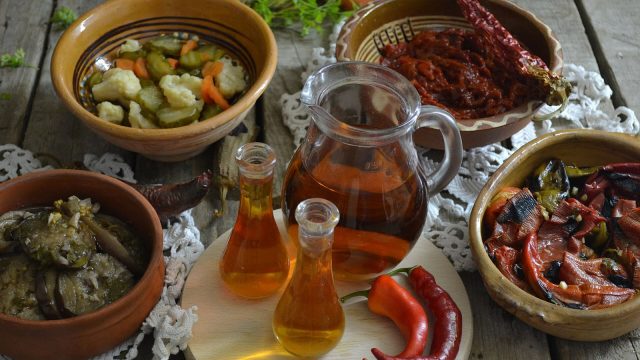
If one smell defines autumn in the Balkans, it is roasting peppers. From September, markets sell red peppers by the sack, and families set up wood stoves and grills in yards and on balconies to make ajvar: a thick, sweet and smoky relish that will be eaten through the winter.
What ajvar is
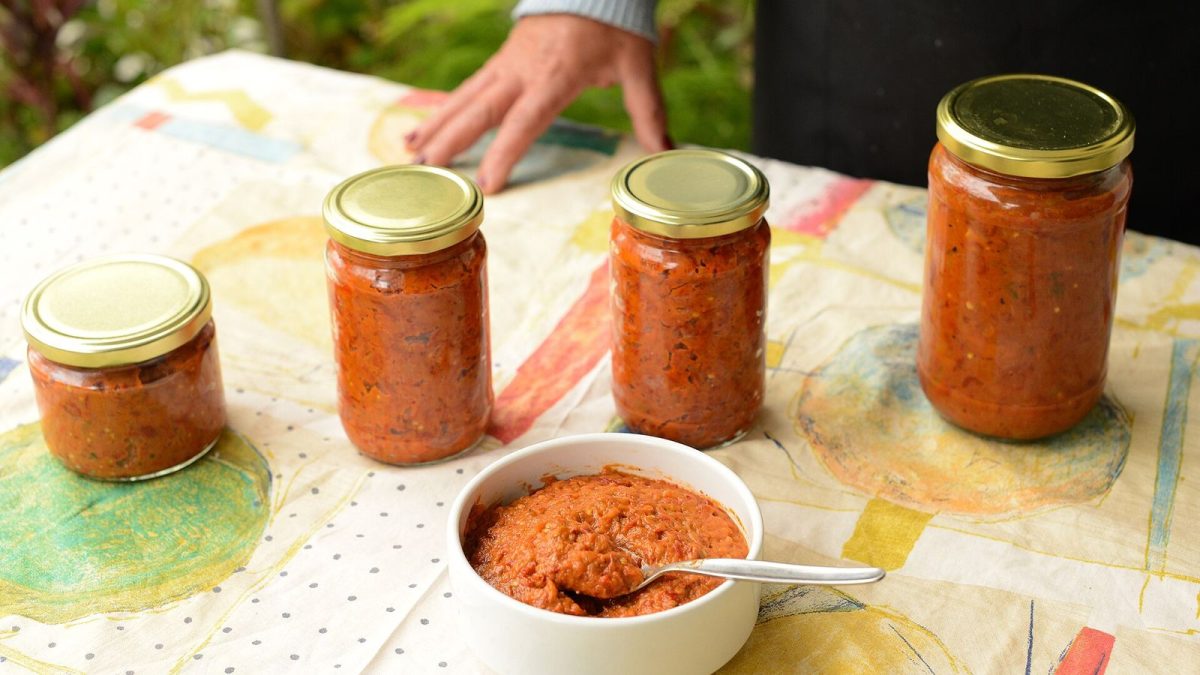
Ajvar is a spread made primarily from red bell-type peppers that are roasted, peeled, chopped or ground, and then slowly cooked with oil and salt until thick. Many recipes add roasted aubergine for body, and some add garlic or a little vinegar. The result ranges from bright red and smooth to deep brick-red and chunky.
The name is believed to come from a Turkish word for caviar, a hint that ajvar was once a humble substitute for a luxury spread.
The kind of pepper matters
The most prized ajvar uses long, fleshy, sweet red peppers ; at markets in North Macedonia and Serbia you will see them sold simply as ajvarka (“ajvar pepper”), alongside the thick-walled babura. Thick walls give more pulp and a sweeter taste. For hot ajvar, a few chillies are roasted along with the sweet peppers.
How families make it
- Roast. Peppers (and aubergines, if using) are roasted whole on a wood stove, grill or in an oven until the skins blacken and blister.
- Steam and peel. They are placed in a covered container or bag so the steam loosens the skins, then peeled by hand and the seeds removed. This is the slow, sociable part, often a whole family around a table.
- Grind or chop. The flesh is minced finely or chopped, depending on the texture wanted.
- Cook down. The pulp is cooked slowly in a large pot with oil and salt, stirred constantly with a long wooden spoon, for several hours until thick and glossy and the oil starts to separate.
- Jar. The hot ajvar is poured into sterilised jars, topped with a little oil and sealed for the winter.
The stirring rule: ajvar sticks and burns very easily. That is why the cooking stage needs constant stirring, and why it is traditionally a task shared between several people.
A smaller home batch
Ingredients: 3 kg red peppers, 1 medium aubergine (optional), 150–200 ml sunflower oil, 2 cloves garlic (optional), 1–2 tsp salt, 1 tbsp vinegar (optional).
- Roast peppers and aubergine under a hot grill or on a barbecue, turning, until charred.
- Cover for 15 minutes, then peel and deseed.
- Blend or chop finely; add crushed garlic if using.
- Cook in a heavy pot with half the oil over low heat, stirring often, adding the rest of the oil gradually, for 1–2 hours until thick.
- Season with salt and vinegar. Store in the fridge for up to two weeks, or jar properly for longer storage.
Ajvar vs similar spreads
| Spread | Difference |
|---|---|
| Ljutenica / lutenica | Includes tomatoes and often carrots; looser and more tomato-forward. Popular in Bulgaria and North Macedonia. |
| Pindjur | Peppers, aubergines and tomatoes with garlic; often chunkier and fresher. |
| Zarzavat (Albanian) | A broad family of cooked vegetable spreads and preserves; recipes vary widely by household. |
How to eat ajvar
- Spread on warm bread, with white cheese, the simplest and most common way.
- Alongside grilled meat such as qebapa / ćevapi and pljeskavica.
- With flija, byrek, or scrambled eggs at breakfast.
- Stirred into pasta or used as a sandwich spread.
A tradition worth keeping
Shop-bought ajvar is everywhere now, and much of it is good. But the homemade version remains a point of pride, and “whose ajvar is best” is a friendly argument in many families. If you visit the Balkans in autumn and smell roasting peppers in the air, you will understand why people still take the time to make it the old way.
Sources and further reading: regional culinary traditions of North Macedonia, Serbia and Kosovo; producer information on ajvar pepper varieties.