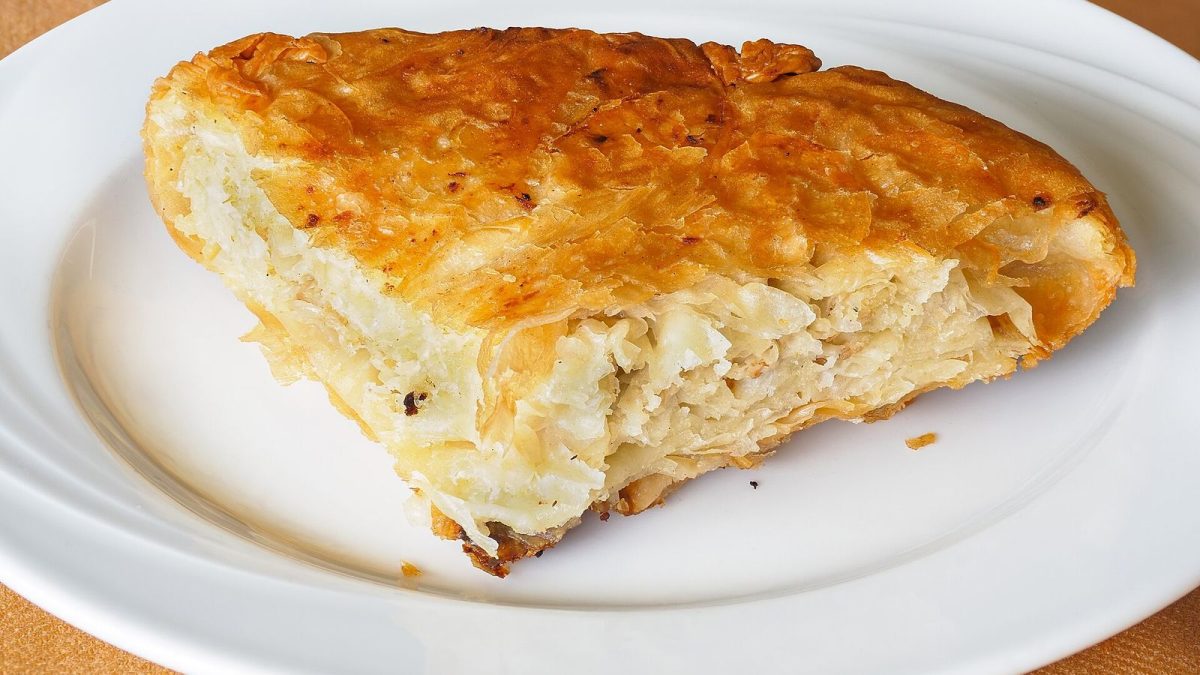
From Slovenia to Kosovo and from Bosnia to North Macedonia, few foods are as universal as the layered pastry known variously as byrek, burek or pita. Its roots go back to the Ottoman börek, and each country has developed its own shapes, fillings and arguments about what the word actually means.
The great naming debate
The most famous rule is Bosnian: in Bosnia and Herzegovina, burek is only made with meat. The same pastry with cheese is sirnica, with spinach zeljanica, and with potato krompiruša. Collectively, these are called pita. Ordering a “cheese burek” in Sarajevo is a classic visitor’s mistake, and a good conversation starter.
Elsewhere, “burek” or “byrek” is generally used for the pastry as a whole, with the filling named after it: burek sa sirom (with cheese) in Serbia, byrek me spinaq (with spinach) in Albania.
Country by country
| Place | What you will find |
|---|---|
| Bosnia and Herzegovina | Coiled spirals of hand-stretched dough baked in a round tray, often under a saç. Burek = meat; other fillings have their own names. |
| Albania | Byrek in large trays or in small individual pieces from street bakeries. Very popular fillings include spinach, cheese, tomato and onion, and minced meat. Village versions use home-rolled sheets. |
| Kosovo | Byrek and the closely related pite are everyday foods; bakeries serve slices from big round trays. |
| Serbia | Flaky burek from the bakery, often eaten with drinking yoghurt for breakfast. Meat and cheese are the classics. |
| North Macedonia | Burek is a breakfast staple, often from a bakery that opens very early; cheese and meat are the usual choices. |
| Slovenia and Croatia | Burek arrived with workers and families from other former Yugoslav republics and became a popular snack, especially late at night. |
What makes a good byrek
- The dough. The best versions are made from dough stretched by hand until almost transparent. Factory sheets are fine for home cooking, but bakery pastry made fresh in the morning is in a different class.
- The fat. Layers are brushed with oil or butter so they turn crisp outside and stay soft inside.
- Balance. The filling should be moist but not soggy ; spinach is squeezed dry, cheese is often mixed with egg and a little yoghurt.
A simple home recipe: spinach and cheese byrek
For a 30 cm tray: 500 g filo sheets, 500 g fresh spinach (or frozen, thawed and squeezed), 250 g white cheese (feta-style), 2 eggs, 150 g plain yoghurt, 100 ml oil or melted butter, a spring onion, salt and pepper.
- Chop and wilt the spinach with a pinch of salt; squeeze out excess water.
- Mix the spinach with crumbled cheese, one egg, chopped spring onion and pepper.
- Oil the tray. Lay half the filo sheets, brushing each lightly with oil.
- Spread the filling evenly, then cover with the remaining sheets, oiling each.
- Whisk the second egg with the yoghurt and a little oil; pour over the top and let it soak in. Score into portions.
- Bake at 200 °C for about 35–40 minutes, until deep golden. Rest 10 minutes before cutting.
Local habit: after baking, some cooks sprinkle the hot byrek with a little water and cover it with a cloth for a few minutes. This softens the top layers slightly, the way many people prefer it at home.
How to order like a local
- Bakeries often sell by weight or by the slice, point and say how much.
- Ask for yoghurt to drink with it (jogurt / kos); it is the classic pairing.
- Go early. The best bakeries sell out of popular fillings by late morning.
- In Bosnia, remember: if you want cheese, ask for sirnica.
Byrek is cheap, filling and everywhere, and the differences from one town to the next are part of the fun. Trying it in every country you visit is one of the most delicious ways to understand the region.
Sources and further reading: regional cookbooks and bakery traditions in Sarajevo, Tirana, Pristina, Belgrade and Skopje.