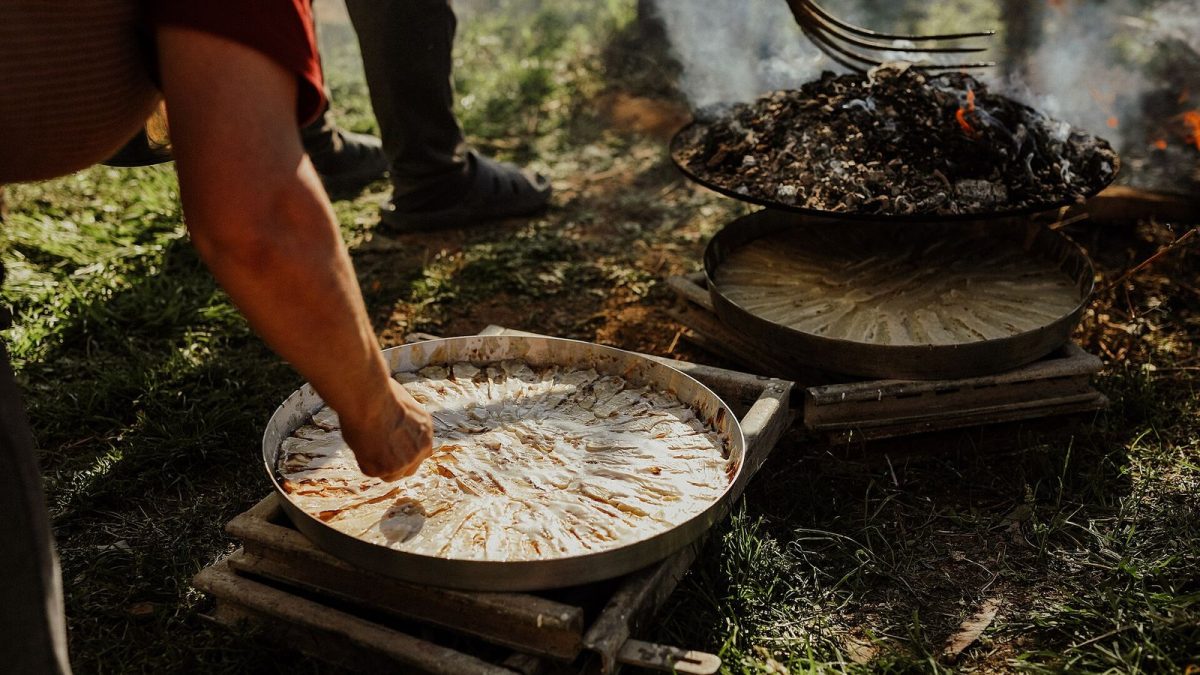
Few dishes are as tied to family gatherings in Kosovo as flija. It is cooked outdoors over a wood fire, usually by a group taking turns, and it often marks summer weekends, harvests or the arrival of relatives from abroad. The result looks like a thick round cake with a striped cross-section, each stripe a separately baked layer.
The equipment
- Tepsi: a large round, shallow metal tray in which the flija is built.
- Saç: a heavy, domed metal lid. It is heated in the embers of the fire until very hot and then placed over the tray to bake each layer from above.
- A wood fire: the hot embers are piled on top of the lid to keep the heat up.
The ingredients
The ingredients are simple; the skill is in the technique.
- Batter: flour, water and salt, whisked to a consistency a little thinner than pancake batter. Some families add an egg or a little milk.
- Filling (the “fill”): a mix of cream (often a thick, sour cream similar to kajmak), melted butter or oil and sometimes yoghurt, loosened with a little water.
How flija is made
- Heat the saç. Light the fire and bury the lid in the embers until it is very hot.
- Grease the tray and pour a little batter in the centre.
- Make the first layer. The first layer is usually a full, thin round of batter. Place the hot saç over the tray and bake until set.
- Brush and add “spokes”. Brush the baked layer with the cream mixture. Then pour the batter in long strips from the centre to the edge, like the spokes of a wheel, leaving gaps between them.
- Bake, then fill the gaps. Cover with the saç to bake the spokes. Brush with cream again, and on the next layer pour the batter into the gaps left before. Alternating like this is what creates the characteristic pattern.
- Repeat. Keep layering (brushing, pouring, baking) until the flija is several centimetres thick. Each layer takes a few minutes; a large flija can have twenty, thirty or more layers.
- Rest and cut. Brush the top layer generously, let it rest, and cut into wedges.
Why it takes so long: each layer must bake before the next can be added, and the saç has to be reheated in the embers regularly. That is why flija is a social dish ; someone keeps the fire going, someone prepares batter, and everyone talks while they wait.
Making flija at home without a fire
Many families living in apartments, in Kosovo and abroad, make flija in a domestic oven using the grill (broiler) setting:
- Preheat the oven grill to high and place a round baking tray near the top.
- Pour a thin first layer of batter into the greased tray and grill until set (2–4 minutes).
- Brush with the cream mixture, pour batter in spokes, and grill again.
- Alternate as above until the tray is full. Keep a close eye on it; grills vary a lot.
The oven version will not have the smoky flavour of a wood fire, but the texture (soft, rich layers with slightly crisp tops) is close.
How to eat it
Flija is usually eaten warm, with:
- fresh yoghurt or sour cream,
- honey, for a sweet version,
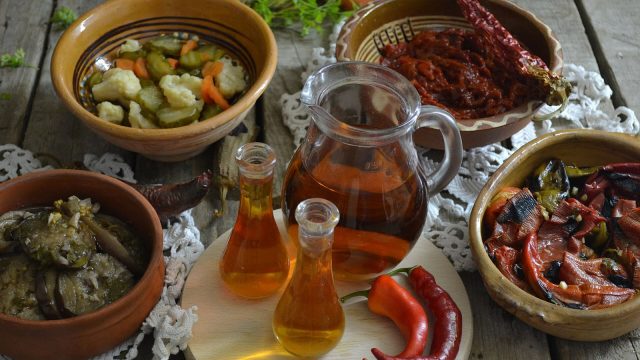
- white cheese and pickled vegetables,
- ajvar, the roasted red pepper relish,
- or simply a glass of dhallë (a salted yoghurt drink).
Flija and identity
For the large Kosovar diaspora in Germany, Switzerland, Austria and elsewhere, flija is a taste of home. Summer visits often include at least one flija day, and in recent years festivals and competitions celebrating the dish have been held in Kosovo. It is also increasingly found on the menus of traditional restaurants, especially in villages around Pristina, Prizren and Peja.
If you visit Kosovo, try it at least once, ideally in a garden, next to the fire, in the company of the people who made it.
Sources and further reading: recipes and descriptions from Kosovar home cooks and traditional restaurants; Kosovo tourism promotion materials on local gastronomy.